The ceiling on small hotel deals moved for the first time in sixteen years
In July the SBA doubled how much a single borrower can hold across its two main programs. For owner operators buying independent hotels, this is the most consequential change to the capital stack in a generation.
Prash PatilAugust 26, 2026 · 6 min read
Most policy changes in this industry are noise. This one is not.
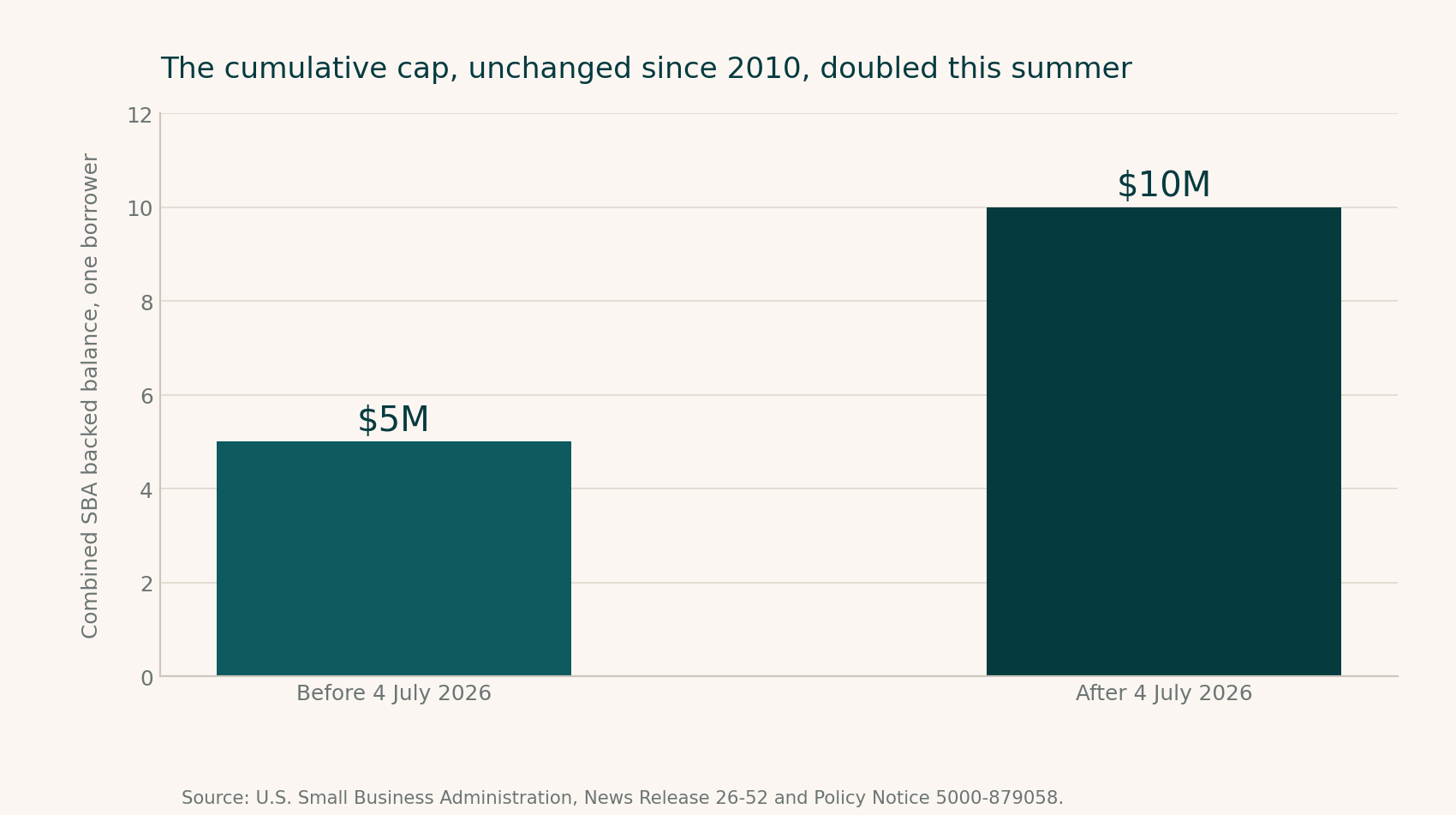
On May 18 the Small Business Administration announced that eligible borrowers could combine 7(a) and 504 financing up to $10 million, double the cumulative ceiling that had stood since 2010. It took effect on July 4, and the agency confirmed it live in a follow up release three days later. In the SBA's own framing, this raises its maximum financing offering to the highest level in the agency's history.
For anyone buying independent hotels at our end of the market, that is the whole ballgame.
What actually changed
The cumulative cap is the total SBA backed debt a single borrower, including affiliates, can hold at one time across both programs. Before July it was $5 million shared between them. If you had a $3 million 7(a) balance, you had $2 million of room left in total, and that room had to cover everything.
The last time Congress raised the individual 7(a) cap was 2010. Source:
U.S. Small Business Administration.
What did not change matters as much as what did. The individual 7(a) maximum is still $5 million. The 504 debenture still caps where it capped. The $10 million figure is not a new product, it is two separate loans from two separate programs that no longer count against each other. Sequencing survives too: the guidance describes the 7(a) being approved first.
That distinction is worth holding onto, because it will be misdescribed constantly over the next year. Nobody is writing a $10 million SBA loan. They are writing two $5 million ones that finally fit in the same borrower.
Why this lands hardest on independents
Conventional hotel lending is a different conversation depending on what is on your sign.
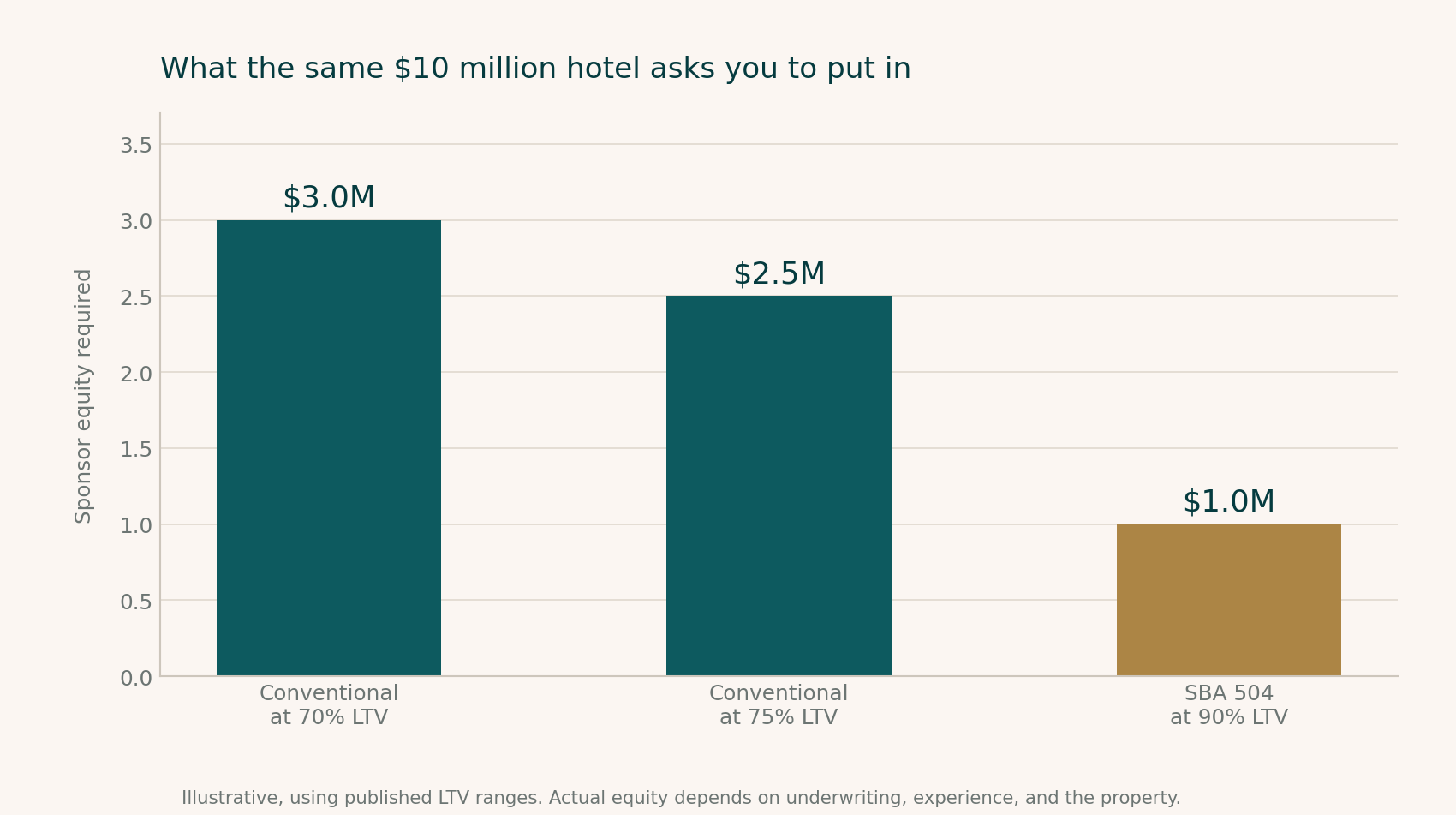
A branded property with stabilised cash flow gets a reasonable look from a bank or a CMBS desk. An independent, in the same market, at the same trailing performance, is a special purpose asset with no flag behind it, and the terms reflect that. Published guidance puts first time buyers and independent purchases toward the higher end of the equity requirement, roughly 20 to 25 percent, precisely because the perceived operational risk is higher without a brand.
That is the gap the SBA exists to close, and the equity math is where you feel it.
Illustrative, using published loan to value ranges. What you actually
put in depends on underwriting, your experience, and the building.
The difference between putting in a million and putting in three is not a financing detail. It is the difference between one deal and three, or between one deal and one deal plus a reserve that lets you survive a bad shoulder season.
The two programs are not interchangeable
They get discussed as though they were a single thing called SBA. They are not, and the choice between them has a running cost.
The 7(a) is a single lender loan covering acquisition, real estate, working capital, renovation, furniture and equipment, and soft costs in one structure. It closes faster, and it typically carries a variable rate tied to Prime, which means you carry the rate risk.
The 504 is a three party structure: a bank first note, a debenture through a Certified Development Company, and your contribution. It reaches higher leverage and locks a long fixed rate on the CDC portion. It also takes longer to close and involves more parties.
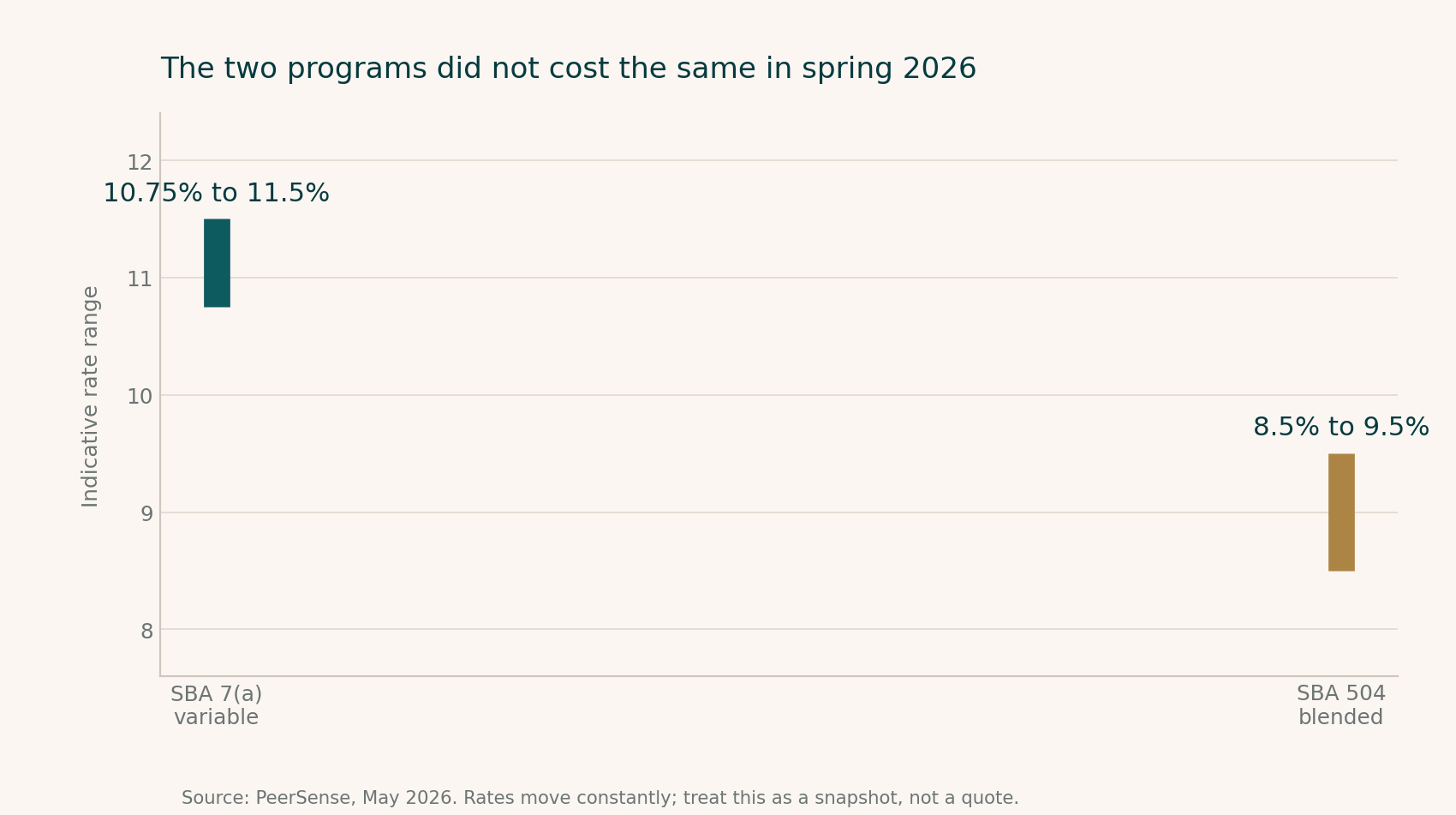
A snapshot from spring 2026, not a quote. Rates move, and the spread
between the programs moves with them. Source: PeerSense.
Two points of spread on seven figures of debt, compounded across a hold measured in decades, is not a rounding error. It is the renovation you can or cannot afford in year six.
What this does not fix
I want to be careful here, because the coverage of this change has been enthusiastic and the guardrails are still standing.
It does not make you approvable. Lenders generally look for a debt service coverage ratio around 1.25 on a global cash flow basis, meaningful hospitality experience, and documented historical performance. Independent properties have to demonstrate the numbers that a flag would otherwise imply. A higher ceiling does not lower a floor.
It does not make it fast. Published timelines run roughly 45 to 75 days for 7(a) and 60 to 90 for 504, and the most common cause of delay is incomplete documentation rather than lender speed. If you are competing against a cash buyer on a short close, this does not solve that.
It does not make the money cheap. Guarantee fees on the 7(a) run into real numbers on larger deals. Variable rate exposure is genuine. And a 90 percent loan to value asset is a highly levered asset, which is a wonderful thing in a rising market and an unforgiving one otherwise.
It does not change the arithmetic of the building. More available leverage on a property that does not perform is a larger mistake, not a smaller one.
A higher ceiling is only useful to a buyer who was already going to be right about the building.
What we take from it
Three things, and then a caution.
The obvious one is that the field of properties we can credibly pursue widened in July, and it widened for every buyer at our scale simultaneously. That second half matters. A structural improvement available to everyone is not an edge. It is a new baseline, and it will show up in what sellers expect.
The second is that this is a strong argument for getting your documentation in order before you need it. The constraint on these deals is rarely the ceiling. It is whether you can produce clean statements, a credible operating history, and a coherent story about the asset fast enough to matter.
The third is that sequencing is now a design decision. When the programs stack rather than compete, how you structure a purchase, a renovation, and working capital across two facilities becomes something to plan deliberately with a lender rather than something you discover at the end.
The caution is the same one I would apply to any change that makes borrowing easier. The most expensive hotels ever bought were bought by people who could suddenly afford them.
A note on what this is. Everything above is general commentary drawn from published sources, linked where cited, and reflects our own reading as owner operators. It is not legal, tax, accounting, financial, or investment advice, and it is not an offer, a recommendation, or a solicitation of any kind. SBA program rules, rate environments, and lender requirements change frequently and vary by borrower, property, and jurisdiction. Nothing here should be relied on in structuring a transaction. Anyone considering SBA financing should confirm current program terms directly with the SBA and with a qualified lender, and should obtain independent professional advice before acting.
This article reflects the personal views and operating experience of the author at the time of writing. It is general commentary, not legal, tax, accounting, financial, or investment advice, and it is not an offer or solicitation of any kind. External figures are drawn from the sources cited and were accurate as published. Market conditions, program rules, and regulations change, and we do not commit to updating anything published here. Confirm anything you intend to rely on with a qualified professional.
The Newsletter
Notes from the field, now and then
Occasional writing on the Southern California lodging market from inside two independent hotels. No schedule, no filler, and nothing sold to you.
We will not share your address, and you can leave at any time.
Pasadena hands a small hotel one enormous compression event every January. The World Cup and Paris just confirmed what those Januaries taught me about what an event premium actually costs to collect.